Attribution in a changing user journey.

Marketers are under more pressure than ever to prove the revenue return on what they spend. According to NIQ’s 2026 CMO Outlook, 84% of CMOs cite return on marketing investment as their primary metric for budget allocation. That pressure isn’t new, but the journey users take when making a purchase is changing, and so is the visibility available to track it. That shift has consequences for an already contested topic: attribution.

Attribution was never a perfect science, but it worked well enough when the user journey was mostly visible, when people clicked, landed, browsed, and converted in ways that left a traceable trail. That world is receding. The journey is fragmenting, lengthening, and moving into places attribution models were never built to reach. Which means the gap between what marketers can prove and what’s actually driving growth is widening, just as they’re being asked to close it.


The attribution problem isn't new, and it isn't getting easier.

Attribution has always been messy, and last-click only dominates because it’s easy, not because it’s accurate. Decisions aren’t linear, aren’t single-channel, and they never look as tidy as a platform report suggests.

The structural reasons are well known by now: poor tracking, the slow death of third-party cookies, cross-device behaviour that breaks session data. Platforms self-report what suits them rather than what actually drove the sale.

None of this means abandoning attribution. Imperfect signals are still signals, and the real problem is treating them as fact, building budgets on them, and leaving no room for what the data can’t see. That gap has always existed, what’s changed is its size, and why.

Layer something newer on top, and it gets harder still. The user journey itself is shifting in ways that make attribution difficult by design, not because the tools are misconfigured, but because more of that journey now happens somewhere no tool can follow.


The user journey is shifting, and it's becoming harder to see.

On top of an already difficult problem, something more structural is changing: AI tools are fundamentally reshaping how people discover, evaluate, and decide.

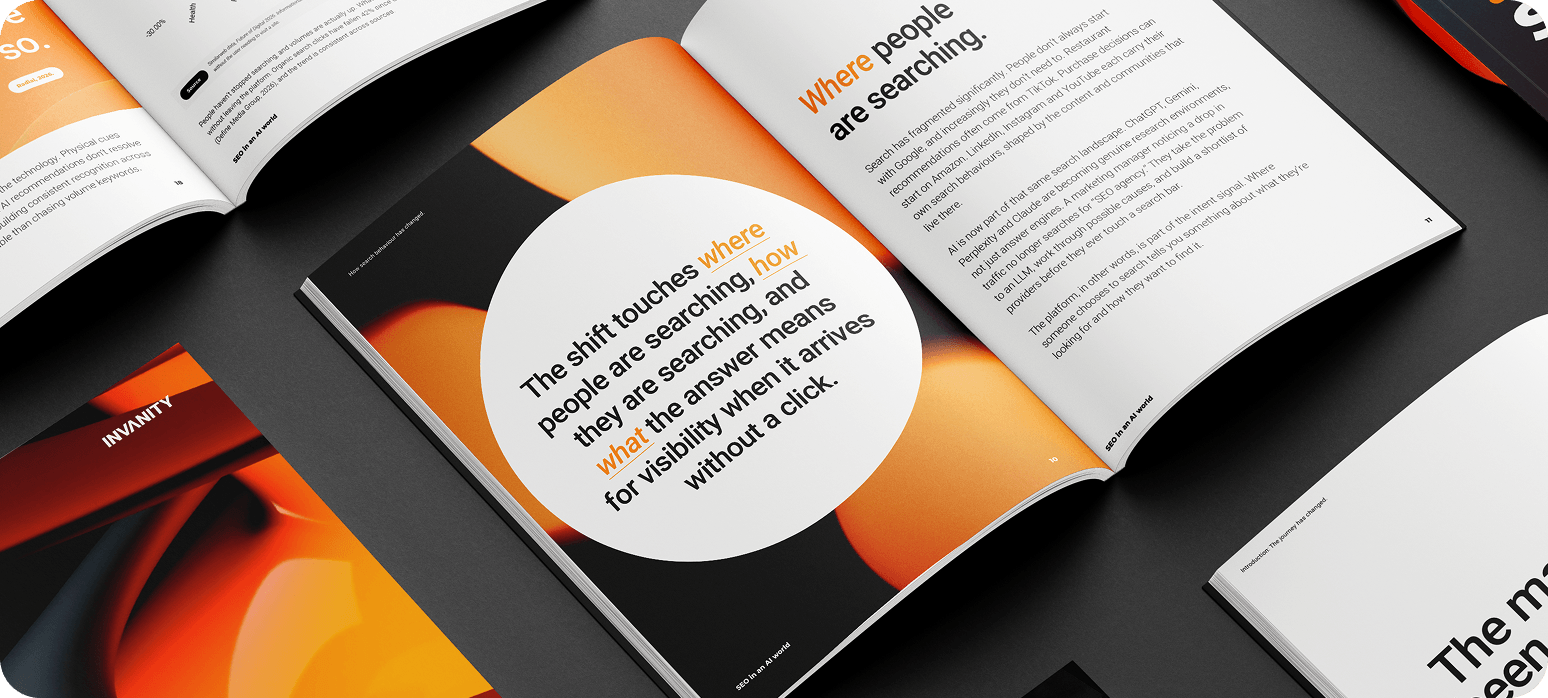
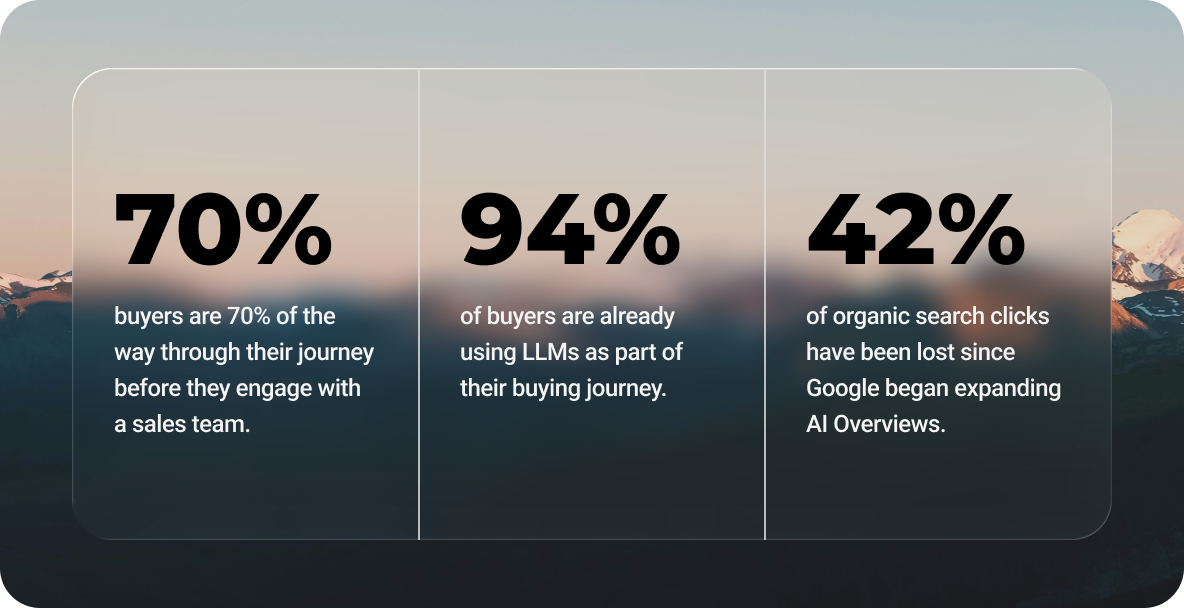
Our SEO in an AI World guide examines this in depth, but the data is clear. Organic search clicks have fallen 42% since Google began expanding AI Overviews, and when a search result includes an AI Overview, only 8% of users click through to a source. People are getting answers without leaving the platform, and without generating any signal your attribution model can read.
The user journey is shifting, and it's becoming harder to see

At the awareness stage, AI-generated summaries and recommendations are replacing traditional discovery channels. A user asking ChatGPT or Gemini which agencies handle B2B SEO will receive a synthesised answer, possibly including your name, without ever visiting your website. That exposure, which may directly influence their next move, is invisible to your analytics. Discovery is also fragmenting across channels. Instagram and TikTok now function as genuine search tools, particularly for younger demographics. Travel decisions are shaped by what people find on YouTube or Reels before a Google search is ever triggered. The starting point has shifted, and in many cases it’s somewhere no UTM can follow.

In the consideration stage, the compression is more significant. Users are synthesising information through AI rather than visiting multiple brand touchpoints. The research phase that used to leave a trail of clicks and sessions is increasingly happening inside an LLM conversation. According to 6Sense’s B2B Buyer Report, buyers are already 70% of the way through their journey by the time they engage with a sales team. That 70% doesn’t happen on your website. It happens in the parts of the journey that are invisible to brands: the dark social, the peer conversations, the AI-assisted research. And LLMs are now a significant part of that invisible middle, with 94% of buyers are already using LLMs as part of their buying journey (6Sense).

At the decision stage, AI tools are influencing final choices with zero visibility to the marketer. No click. No cookie. No attribution. As Adobe has explored in its own analysis of LLM-driven customer experiences, the challenge isn’t just about tracking, it’s about recognising that the AI layer is now a genuine decision-making environment, not just a research aid.

What limited signals do exist – referral traffic from AI tools where it surfaces, branded search trends, share of voice in AI responses tracked through third-party tools – are real, but immature.
Attribution


“In LLM’s, there’s no impression data, no query data, just the clicks you happen to catch and third-party tools that show you whether your brand appeared for prompts you chose to track. Until the tooling catches up, we’re inferring more than we’re measuring. A meaningful and growing share of the journey now happens somewhere no attribution model can reach. Accepting that is the starting point.”

Francesca Hume, Search Lead, Invanity



So what do we do about it?

The answer isn’t paralysis. It isn’t false precision either. It’s a smarter approach. One that holds attribution data loosely, triangulates across multiple signals, and keeps attention on the outcomes that matter most.

Forbes has explored this shift and the consensus is consistent: the marketers navigating this well are the ones who’ve stopped treating attribution as a truth machine and started using it as one lens among several.

Attribution in a Changing User Journey

Here’s what that looks like in practice.

Don’t chase perfect. No attribution model captures the full picture. A perfect attribution model will never arrive. But don’t let that stop you from making progress. Know that better decisions will still be made with inferred attribution over no attribution at all.

Use multiple lenses. Blend last-click or data-driven attribution with incrementality testing – controlled experiments that isolate the actual impact of a channel rather than relying on self-reported platform data. Use share of search as a proxy for brand impact. Track branded search volume over time as an indicator of AI-driven awareness that hasn’t yet translated into a visible touchpoint.

Think in contribution, not causation. Reframe attribution as understanding which channels are contributing to a journey, not which one caused a conversion. That reframe changes the questions you ask and makes the data more useful, rather than forcing it to answer something it can’t.

Track what you can, infer the rest. Maintain rigorous UTM discipline. Invest in first-party data collection. But build in headroom for untracked influence: dark social, AI referrals, word of mouth. The headroom isn’t a failure of the model; it’s honesty about how decisions are actually made.

Anchor to business outcomes. When attribution gets noisy, ground budget decisions in revenue, pipeline, and cost-per-acquisition trends rather than platform-level metrics. Track spend, track revenue return, and agree on a framework for understanding what’s happening in between those two points. Agree on that framework at the start of the engagement and stick with it. Even if it’s not perfect, comparing apples with apples consistently is better than chasing ever-changing precision.


The journey may be less visible. The destination still matters.

Attribution is difficult. It’s getting harder. The AI layer has added a significant new dimension to an already complex problem, one the industry’s tools are not yet equipped to solve.

But the answer isn’t to stop measuring. It’s to measure more honestly: with clearer eyes about what the data can and can’t tell you, with multiple signals rather than one, and with business outcomes as the north star when the signals disagree.

The marketers who navigate this best won’t be the ones with the cleanest attribution model. They’ll be the ones who understand its limits, build accordingly, and stay focused on what’s actually driving growth, even when they can’t prove it with a click.


Luke Powell
LinkedIn

Luke Powell

Luke makes sure Invanity runs the way it should. He puts the right people, processes and technology in place, so client work is delivered to a high standard, and the agency lives up to its own standard: Never Settle.