Pain Points are just best guesses.

Why understanding triggers, buyer psychology, and the evidence you already hold makes for a stronger foundation than imagined frustrations.

Standard GTM practice includes a step where someone, usually from marketing, decides what would push a potential customer to consider the product they’ve been asked to take to market. That becomes the pain point list. It feeds the persona, then the messaging, then the campaign.

It feels rigorous. In practice, it’s a thought experiment carried out at some distance from the market, often without input from sales, rarely cross-referenced against real enquiries, and almost always built to fit the product rather than the other way around. The assumption of who is in pain, and why, is frequently just that: an assumption.

A bigger problem is that the pain point model fundamentally misunderstands purchase motivation. It assumes that frustration drives choice when most buying is triggered by structural changes or routine process. And when buyers choose, they’re driven primarily by confidence and trust, not by how well you’ve identified their problem.

Businesses already have access to better evidence than a workshop can produce, and there are more useful questions to ask than “what is this person frustrated about?


Why pain points fall short: motivation is more varied than the model suggests.

The pain point model rests on a particular assumption: that people buy things because something is wrong and they want to fix it. That assumption has shaped marketing strategy for decades, and it turns out to be a significant oversimplification.

Consider how purchases happen in practice. We order tea bags at Invanity on a regular basis, not because anyone is in distress but because people want tea and we’re running low. The trigger is routine, the motivation is habit, and the emotional stakes are minimal. For many businesses, outsourcing a function to a B2B vendor carries exactly the same quality of motivation: a contract has come up, a process requires it, or it is simply how things are done in the sector. Nobody is in pain, they are just following the process.

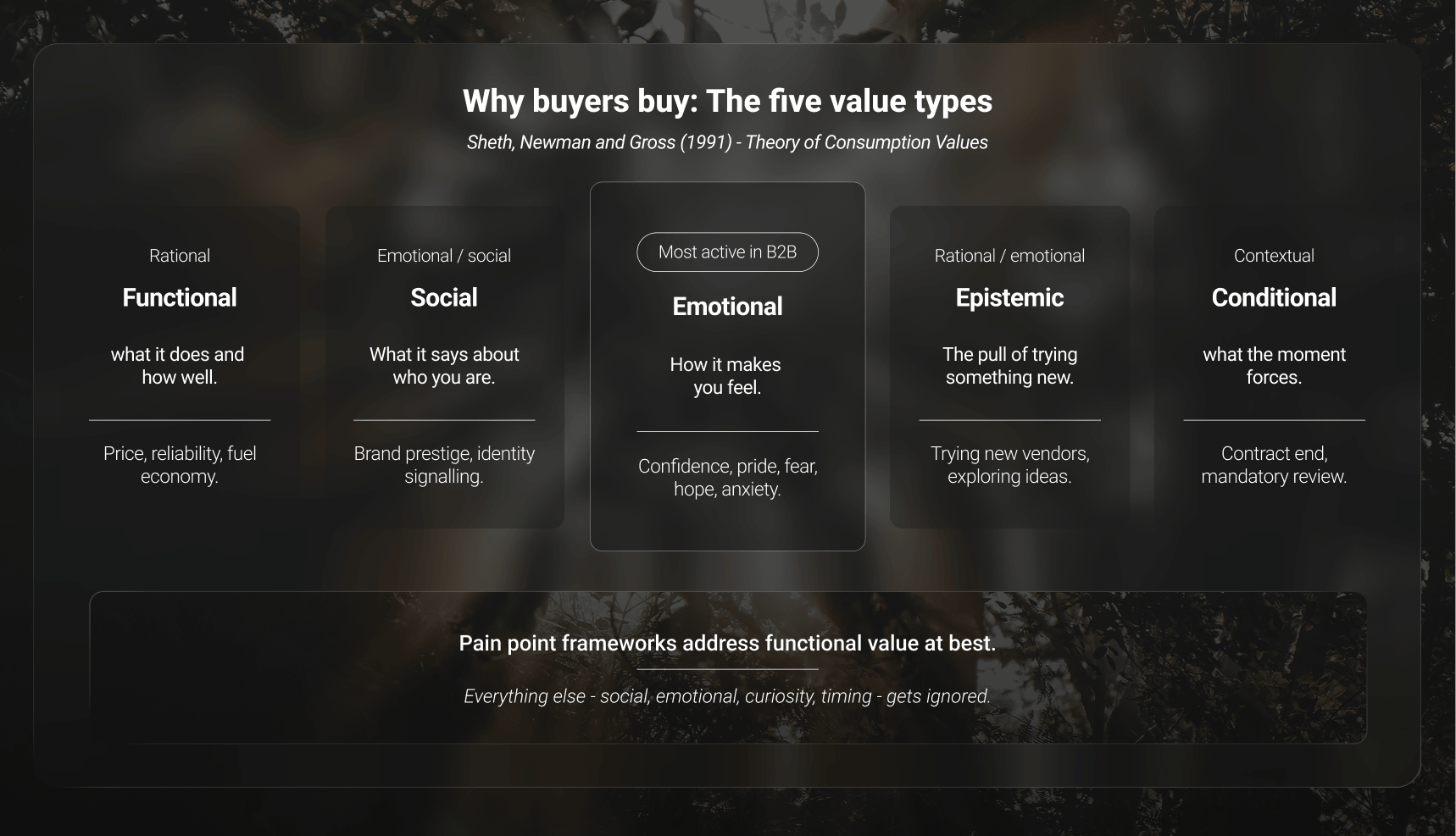
Pain as a driver also ignores several factors that, in many buying situations, carry considerably more weight. In their Theory of Consumption Values, Sheth, Newman and Gross identified five distinct drivers of purchase decisions: functional value, social value, emotional value, epistemic value, and conditional value. As the diagram below shows, pain maps loosely onto functional value at best, and even then only partially. The standard pain point model leaves the other four largely untouched.

Why pain points fall short motivation is more varied than the model suggests.


Everyone knows the 95/5 rule. Almost nobody budgets for it.

Even in the supposedly rational world of B2B, emotion is doing more work than most marketing frameworks account for. A Harvard Business Review study of 1,065 corporate decision-makers, cited in TriComB2B’s research, asked respondents to rank 36 value elements in their decision making process. “Hope” ranked 4th. Emotional attributes, including “Trust,” “Expertise,” “Vision,” and “Cultural Fit,” consistently outranked the functional value propositions that most B2B marketing leads with.


“Emotion trumps lower prices. That is the hardest argument to make to a business-to-business marketer, yet consumer marketers bank on it.”

TriComB2B, The Role of Emotion in B2B Decision Making


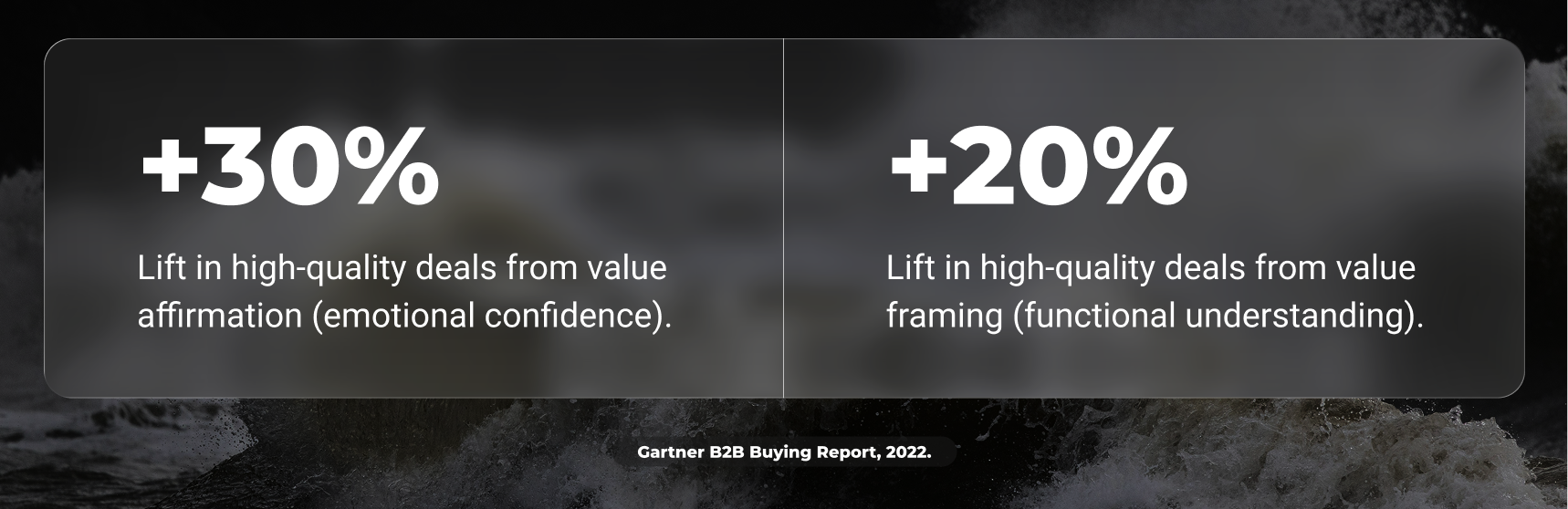
Gartner’s B2B buying research makes the same point from a different angle. Interactions that help buyers feel confident and validated in their decision produce a 30% lift in high-quality deals. Interactions that help buyers understand what a product does, closer to what most pain point messaging is designed to achieve, produce a 20% lift. The emotional reassurance is outperforming the functional argument.

Everyone knows the 95/5 rule. Almost nobody budgets for it.

What pain point frameworks miss, in practice, is most of this motivational landscape. They address frustration adequately and functional value partially. Social, emotional, epistemic, and conditional value receive almost no attention at all, which means the messaging they produce is systematically incomplete.


A better lens: triggers, not frustrations.

If pain is an unreliable guide to why people buy, triggers are more useful: they’re real, observable events that create the conditions for a purchase. In B2B, triggers fall into two categories: structural, where an organisational or commercial change creates new need, and reactive, where a deteriorating relationship prompts a vendor review. The pain point model suits the reactive category, but most purchases originate in the structural one.

Organisational change.

According to Gartner’s 2022 B2B Buyer Survey, 99% of B2B purchases are driven by some form of organisational change, whether digital transformation, restructuring, or an operational shift. The overwhelming majority of purchase decisions are not initiated because something is broken, but because something in the organisation has moved and new capability is needed as a result. Pain point frameworks are essentially designed for the minority of cases.

A skills or capability gap.

Where an existing supplier cannot meet a new requirement, buyers begin looking elsewhere. VoxComm and WFA’s guidance on agency selection identifies this explicitly as one of the primary reasons clients run pitches, particularly when a new strategic direction creates a need the incumbent was never hired to fill.

Mandatory review cycles.

Procurement policy in many organisations requires a competitive tender above a certain cost threshold or after a set contract period, typically every three to five years. Nobody in that process is in pain. The review is a procedural requirement, and the vendor landscape that gets considered is shaped largely by prior familiarity.

Incumbent underperformance.

A reactive trigger, and the one that most closely resembles what pain point frameworks are built for. When an incumbent is visibly underdelivering, the buyer has both motivation and internal justification to start a review.

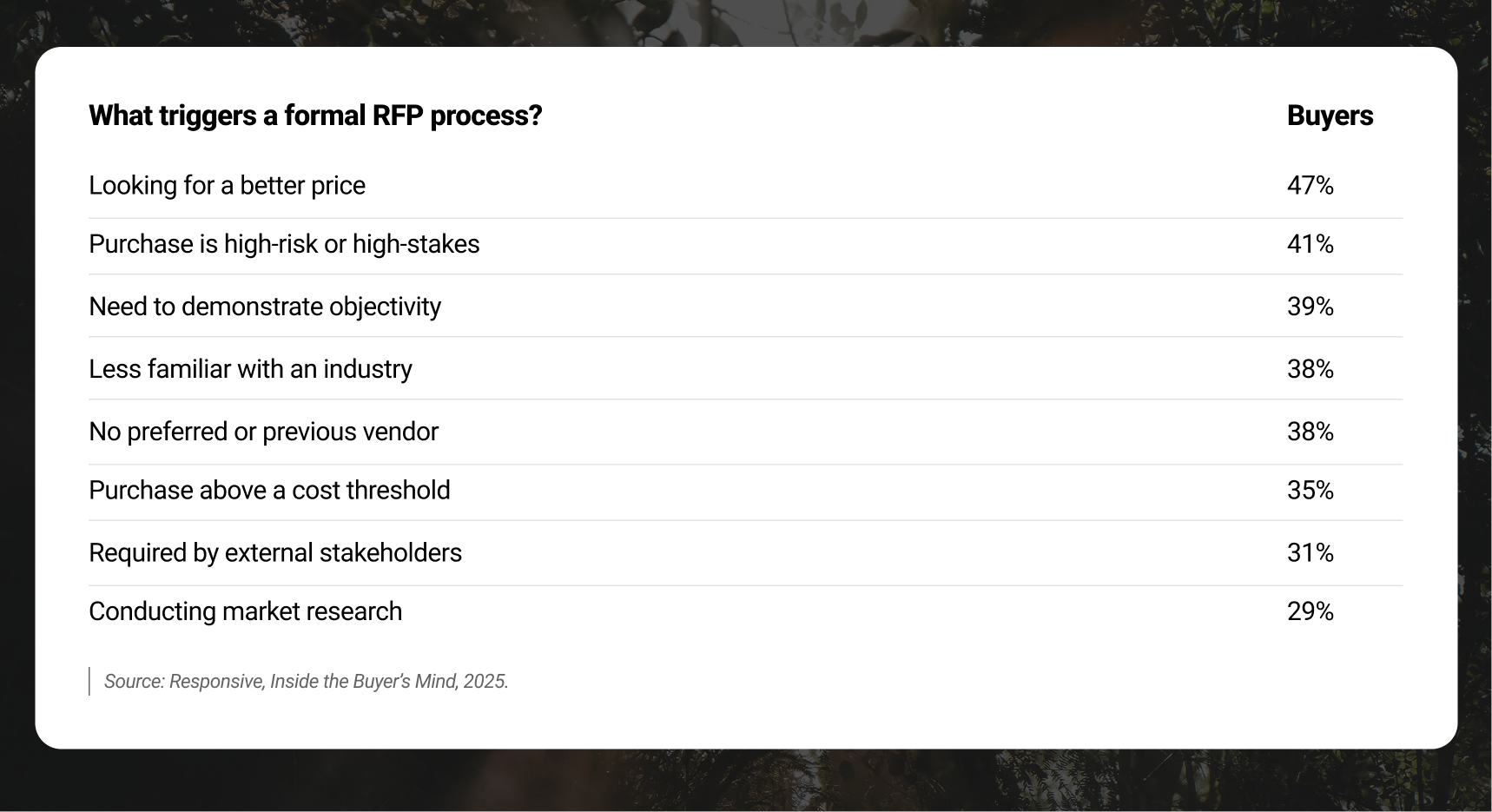
The data on what prompts a formal buying process reflects this pattern. Across the eight most common RFP triggers identified by Responsive’s 2025 research, only one, incumbent underperformance, maps with any confidence onto conventional pain. The rest are procedural, commercial, or structural: a cost threshold has been reached, objectivity needs to be demonstrated, a preferred vendor does not yet exist.

A better lens: triggers, not frustrations.

A GTM strategy built around imagined frustrations is poorly positioned to respond to any of these, because most of them were never frustration-driven in the first place.


Use the evidence you already have.

Rather than constructing pain points from assumption, most businesses already have access to evidence that tells them far more directly what the market is looking for.

RFPs and inbound briefs. If you have been issued RFPs, these are among the most valuable documents you have. They come directly from prospective clients and tell you, in their own words, what they are looking for, what they will assess, and often the relative weight they attach to each criterion. That is a level of specificity that no persona exercise can match.

Your CRM. Closed-won deals, and particularly the initial enquiries that preceded them, are a record of what real buyers wanted when they found you. The patterns across those enquiries, the language used, the capabilities requested, the questions asked, will tell you more about genuine demand than any workshop. Closed-lost records are equally, if not more, informative.

Your sales team. Even anecdotal evidence from people who spend their time in real buying conversations is worth considerably more than assumptions developed without that input. What has landed? What objections come up repeatedly? What does the person on the other side of the table actually seem to care about? These are conversations that most marketing teams have too infrequently.

The people who built the product. Founders and product teams often have a clear, grounded sense of the real problem they were solving. By the time the GTM deck is being assembled, that original motivation can already be several degrees removed from the people writing the messaging. Going back to that source reconnects the whole exercise to something concrete.

Customer reviews and feedback. Frustrations can be a signal, but so can enthusiasm. The gap between what someone wanted and what they got is often where unmet needs surface most clearly. In B2C particularly, the product someone is reaching for but not quite finding is a real market opportunity, grounded in behaviour rather than assumption.

The common thread through all of these is that they require you to go to the market rather than imagine it. Pain point frameworks manufacture a buyer, where these sources find one.


Personal risk is a more powerful driver than pain.

Pain point frameworks assume the buyer’s primary concern is solving a business problem. The evidence suggests their primary concern is often something closer to home.

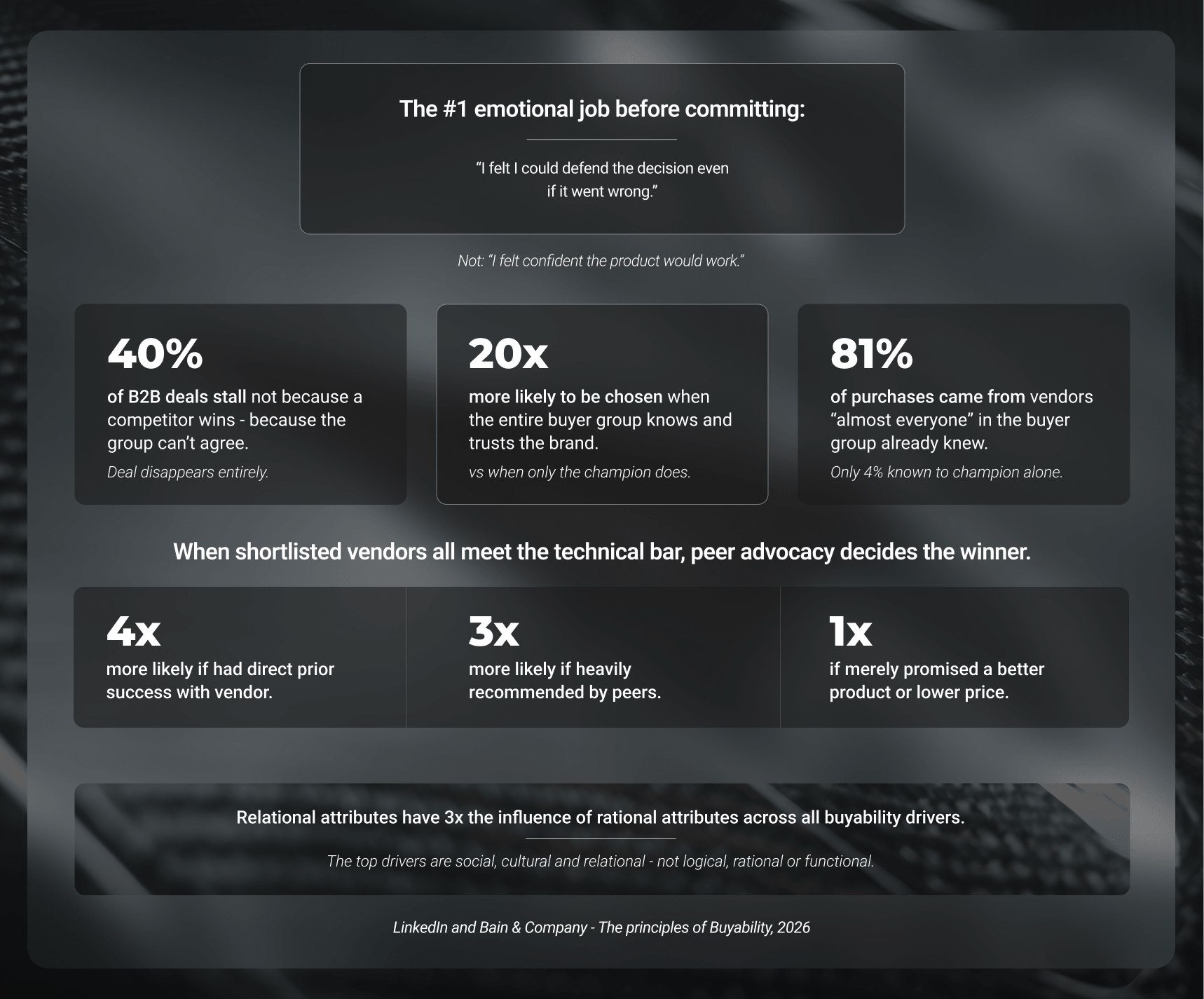
Research from LinkedIn and Bain & Company, published in June 2026 as the Buyability framework, asked B2B buyers to rank their top emotional “jobs to be done” before committing to a purchase. The number one answer was not “I felt confident the product would work.” It was: “I felt I could defend the decision even if it went wrong.”

The professional stakes behind this are real. A vendor choice that goes wrong reflects on the person who made it. Credibility, trust, and in some cases career progression are all in play. That makes looking like a safe, established, well-regarded choice matter considerably more than most pain point messaging is designed to address.

The vendor familiarity data from the same research makes the consequence plain. Vendors are 20 times more likely to be chosen when the entire buyer group knows and trusts the brand at the start of the process, compared to when only the technical champion does. 81% of purchases came from vendors that “almost everyone” in the buyer group already knew.

Personal risk is a more powerful driver than pain.

Pain point messaging addresses what a product solves. It has no answer for what a buyer needs to feel confident enough to commit, and to stand behind that commitment if things go wrong.


Understanding their challenges still matters - but the source has to be real.

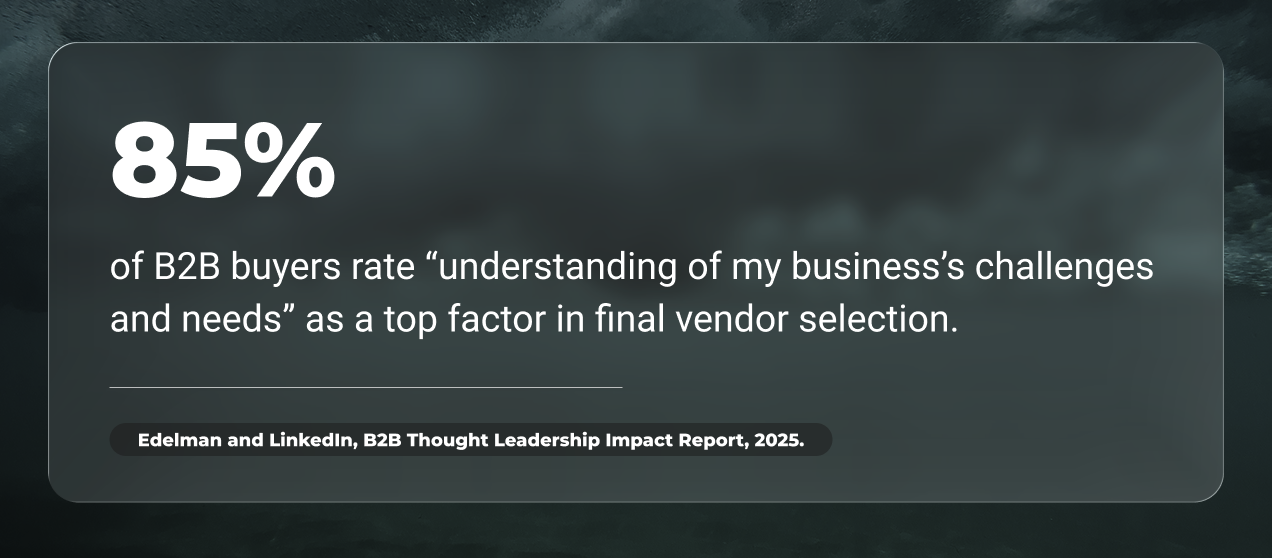
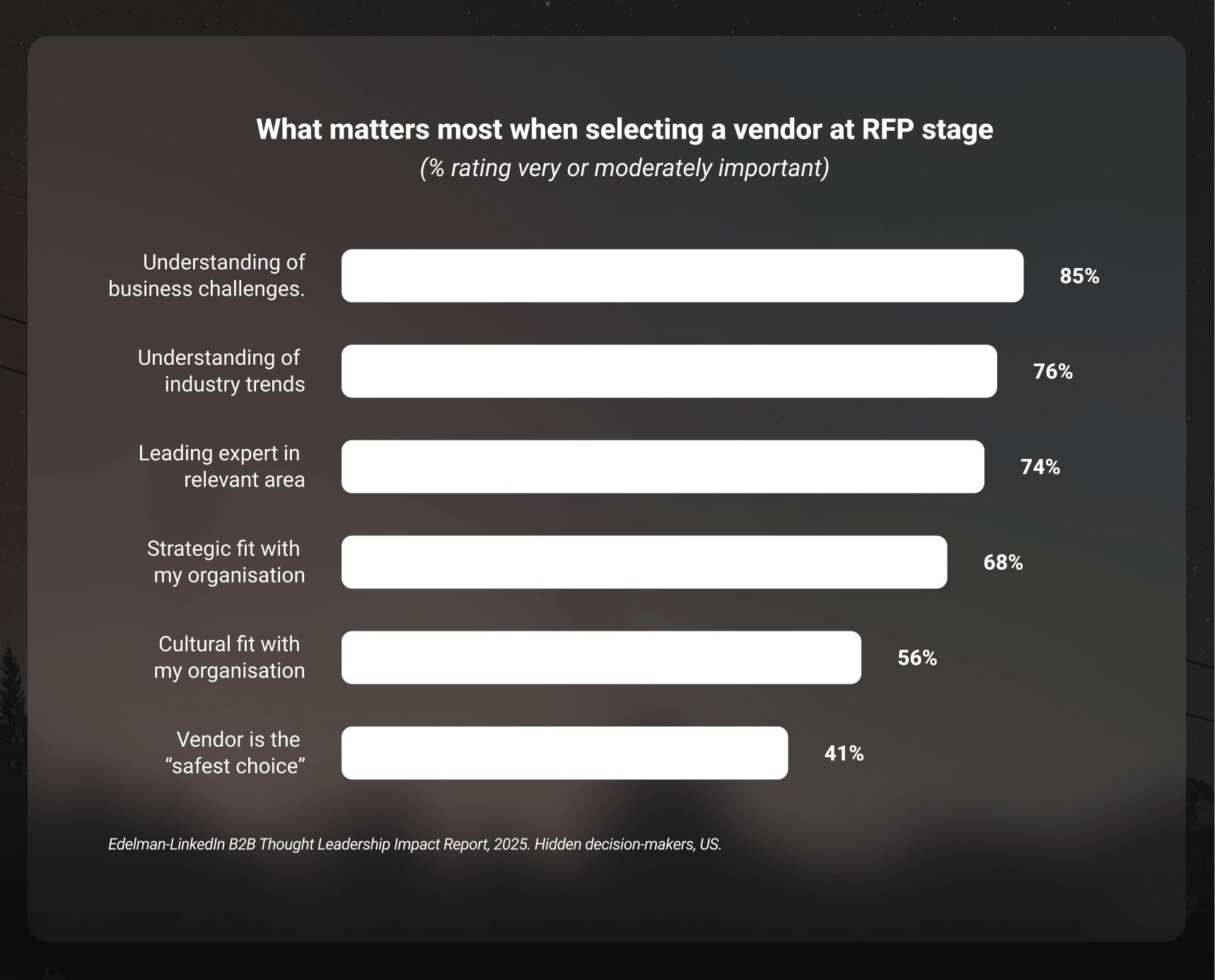
None of this is an argument for ignoring what your buyers care about. In fact, Edelman and LinkedIn’s 2025 B2B Thought Leadership Impact Report found that 85% of buyers rated “understanding of my business’s challenges and needs” as the highest-rated factor in final vendor selection, above industry expertise, strategic fit, and cultural alignment.

Understanding their challenges still matters — but the source has to be real.

This matters most when it comes to content, and thought leadership in particular. The content that earns trust with buyers, including the Finance, Legal, and Procurement stakeholders who can quietly remove a vendor from consideration before a shortlist is ever formalised, needs to sound like it comes from someone who has worked in the sector. It should address things buyers are dealing with in practice, not challenges assembled from assumptions about what the category probably finds frustrating.

That kind of credibility cannot be manufactured in a workshop. It has to be grounded in something real: in what enquiries have asked for, in what sales conversations have surfaced, in what the people who built the product knew when they built it, and in what the trigger events that bring buyers to market look like when they arrive.

Visual 05 1


Final thoughts.

Understanding what your buyers are wrestling with is important. It should inform your content, your conversations, and how you position your offer. But it is only one part of why any buyer starts looking for a new vendor, and often not the most decisive part.

Most purchases are not initiated because something is wrong. They happen because a contract came up, a restructure created a new requirement, or a procurement policy requires a periodic review. The trigger is structural or procedural, not a response to frustration. And even where genuine dissatisfaction is present, the vendor who wins is rarely the one who identified it most accurately. They are the one who was already known, already trusted, and already credible when the process began.

Ultimately, the most useful thing any marketer can do is understand what a buyer is hoping to find at the moment they encounter your messaging, and that changes at every stage of the journey. No single pain point speaks to all of those moments. Messaging that does has to be built on a thorough understanding of the journey, what motivates a buyer at each stage, what concerns them, and what they are looking to confirm. That knowledge has to come from real evidence, not a list of assumed frustrations.


Simon Batten
LinkedIn

Simon Batten

Simon turns commercial ambition into marketing strategy. He works across the full strategic range, from positioning to multi-channel GTM and ABM campaigns. His specialism is making complex markets simple to navigate and building plans that connect brand to pipeline.